OperationsJune 24, 2026· 6 min read
What a poorly monitored cold room really costs
Product loss is only the visible line. Add energy, corrective maintenance, spreadsheet rework and sanitary risk, and the annual figure surprises even people who already suspected.
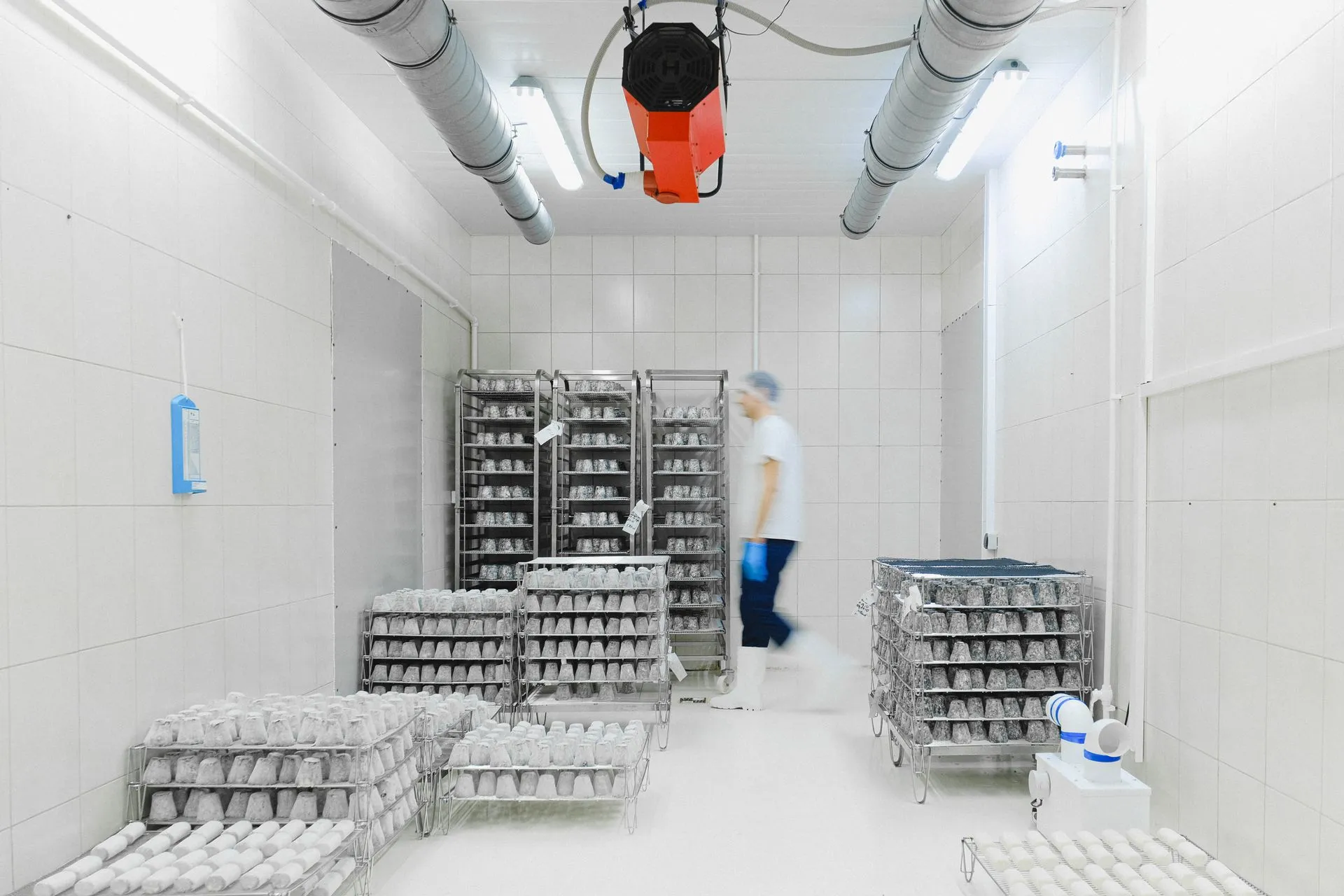
When we ask a manager what a poorly monitored cold room costs, the answer almost always begins and ends with product loss. It’s the most visible line — and usually less than half the total.
Let’s open the maths in five lines, the way we do on site visits. The figures below are illustrative, for a medium-sized store; the structure is what matters.
Line 1 — Product loss
The obvious and most painful line. A medium chilled room holds somewhere between R$ 15,000 and R$ 40,000 of product. One night out of range rarely compromises everything, but compromising 20% is already an expensive event.
What tends to be underestimated isn’t the big event — it’s the diffuse loss: product that spent hours at borderline temperature, lost shelf life and becomes waste three days later on the shelf. Nobody links that waste to a refrigeration failure; it goes into the statistics as “operational shrink”.
In operations we have instrumented, diffuse loss tends to run two to three times higher than catastrophic incident loss.
Annual estimate: R$ 25,000 to R$ 90,000 per store.
Line 2 — Energy
Refrigeration typically accounts for around 40% of a supermarket’s power bill. Within that percentage there is a slice that is pure mechanical waste:
- Doors left ajar. The unit enters continuous operation trying to compensate. In the field we measured stores averaging 19 minutes of open-door time per cold room per day.
- Badly tuned defrost. Cycles more frequent or longer than necessary.
- Iced evaporator. Air circulation drops, the compressor works harder for the same result.
- Over-conservative setpoint. Holding −22 °C where −18 °C would do costs money every day of the year.
None of these problems appear on the temperature form, because in all of them the temperature is correct. The equipment is delivering the result — it’s just paying dearly for it.
Annual estimate: 10% to 20% of the refrigeration bill, which for a mid-sized store means roughly R$ 12,000 to R$ 35,000.
Line 3 — Corrective maintenance
Corrective maintenance costs two to four times more than planned maintenance. Not for the work itself, but for everything around it: a technician on call-out rates, a part with no quote, product that has to be transferred to another site, and an operation partially stopped.
There is also the domino effect, which is the norm in cold rooms with parallel compressors. When one stops, the others compensate. Compensating means running above design duty. Two weeks later the second compressor fails — and now the whole load has to move stores.
Annual estimate: R$ 8,000 to R$ 30,000, with high variance.
Line 4 — Rework and operating hours
This line never shows up in a report, but it is real. A store with 15 refrigerated assets and three daily rounds burns between 1 and 2 hours a day just measuring and writing. Add monthly consolidation of the forms and audit preparation.
That’s 30 to 60 hours a month of labour on an activity that creates no value — the recorded information is almost never consulted before a problem happens.
Annual estimate: R$ 10,000 to R$ 22,000 in labour cost.
Line 5 — Sanitary risk and reputation
This line has no easy expected value, but it has a long tail. Health-authority fines, partial closure, and in the worst case an incident involving a consumer.
The good news is that it is the cheapest line to mitigate: continuous, auditable logging costs little against the exposure it removes.
Annual estimate: hard to price, high impact when it materialises.
Adding up
For a medium-sized store, the first four lines total somewhere between R$ 55,000 and R$ 177,000 a year. Across a 14-store chain, that becomes a range of R$ 770,000 to R$ 2.4 million.
The point isn’t the exact number — your operation has its own. The point is that product loss, the only line most people track, tends to be less than half the total.
Running your own numbers
Four questions settle the estimate:
- What is the average stock value per cold room?
- How many temperature incidents did you have last year — including the ones nobody formally logged?
- How many hours a month does the team spend measuring, writing and consolidating?
- What share of your power bill is refrigeration?
With those four answers, calculating the return on a monitoring system takes fifteen minutes. In most cases we’ve worked through, it closes on a single avoided incident.
We have a spreadsheet that runs this calculation with your figures. It’s on the resources page.
- #cost
- #efficiency
- #management