MaintenanceJune 05, 2026· 7 min read
Predictive maintenance for compressors: what vibration tells you before the failure
Compressors warn you before they fail — in vibration, in inrush current and in recovery time. How to read those three signals and turn them into a maintenance window.
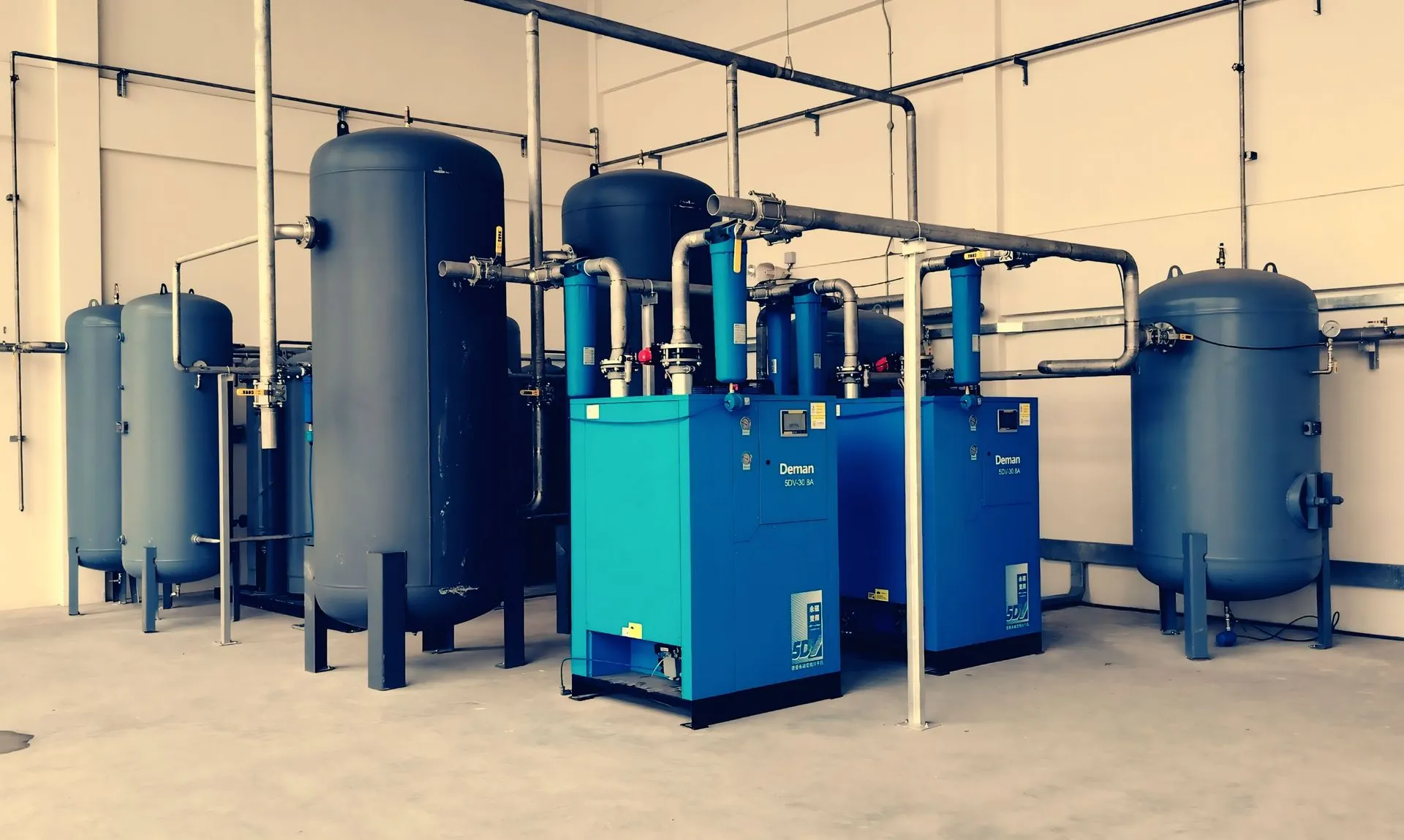
Refrigeration compressors don’t fail out of nowhere. They warn you — in a language most operations aren’t instrumented to hear. This article is about the three most useful signals, and about what can and cannot be predicted from them.
Why temperature arrives late
The first instinct is to use cold room temperature as a compressor health indicator. It makes sense: if the compressor is worse, temperature rises.
The problem is that refrigeration systems are designed with headroom. A compressor with 30% mechanical degradation still holds the room in range — working harder, consuming more and wearing faster, but delivering the right number. Temperature only exposes the problem when the headroom runs out, and by then failure is days away.
That’s why the useful indicators are mechanical and electrical, not thermal.
Signal 1 — Vibration signature
Every compressor has a characteristic vibration signature: a frequency spectrum determined by rotation, bearings, coupling and mounting.
When something degrades, the spectrum changes in fairly specific ways:
- Bearing wear appears as increased energy in high-frequency bands.
- Imbalance appears at rotation frequency and its harmonics.
- Mechanical looseness or degraded mounts appear as increased low-frequency vibration and spectrum spreading.
- Valve problems typically appear as periodic impulses.
In practice, for continuous low-cost monitoring, full spectral analysis isn’t necessary. Tracking total vibration energy and the distribution across a few frequency bands already detects most relevant degradation — provided you have a baseline of the same unit in healthy condition.
That’s the critical point: vibration is a relative indicator. There is no universal “bad vibration” value. There is only “different from what this compressor was doing three months ago”.
Signal 2 — Inrush and running current
Electrical current is the second richest indicator, and it’s easier to instrument than vibration.
Three patterns are worth tracking:
Inrush peak. A compressor with higher internal friction or a starting problem draws more current the instant it switches on. The upward trend of that peak over weeks is one of the most reliable wear signals.
Running current. A gradual rise in operating current, at the same thermal load and ambient temperature, indicates growing effort.
Duty cycle. How long the compressor runs relative to total time. If it moves from 45% to 70% run time with no change in load, something is wrong — it could be the compressor, the sealing, or an icing evaporator.
Current also detects the silliest failure of all: equipment switched off. Zero current on a compressor that should be cycling is an alarm worth having on its own.
Signal 3 — Recovery time
This one is derived rather than measured directly, and it’s my favourite for its simplicity.
Every time a cold room door opens, temperature rises. When it closes, the system recovers. The time it takes to return to setpoint, normalised by how long the door was open and by ambient temperature, is a direct measure of the real cooling capacity available.
A healthy system recovers in a consistent time. When that time grows month after month, capacity is falling — through wear, refrigerant charge, a dirty condenser or ice on the evaporator.
The advantage is that this indicator uses data you already have: temperature and door state. No additional sensor.
From signal to work order
Detecting degradation is half the job. The other half is turning it into action without generating noise.
The design that works in practice has three levels:
- Watch. The model detects deviation from baseline, still within normal variation. Nothing fires; the asset goes onto a watch list.
- Recommend. The deviation persists over several days. The system opens a task on the team board with a suggested window — “check compressor 3 within 15 days” — and the history that justifies it.
- Urgent. Accelerating degradation or a combination of signals. Immediate alert to the owner, with escalation.
The classic mistake is jumping straight to level 3. Predictive maintenance that shouts loses credibility within a month, and a team that doesn’t trust the alert is worse than a team with no alert.
What can’t be predicted
Worth being honest about the limits.
Sudden failure from external causes. A voltage surge, an object dropped on the pipework, an operating error. No wear model anticipates that.
The exact date. Degradation models give a window — “probably between 10 and 25 days” — not a date. Anyone promising day-level precision is selling confidence they don’t have.
Equipment with no baseline. A newly instrumented compressor needs a few weeks of normal operation before the model has anything to compare against. There is no shortcut.
Where to start
If your operation currently measures only temperature, the highest-return order is:
- Current. Cheap to instrument, detects equipment switched off, doors ajar and growing effort.
- Door state. Enables the recovery-time indicator and, on its own, addresses one of the largest sources of waste.
- Vibration. Highest predictive value, but needs a baseline and a little more care on installation.
The three together, with six months of clean history, give a failure forecast good enough to trade unplanned stops for scheduled maintenance. And that trade alone tends to pay for the whole system.
Our interactive demo shows a compressor degrading over weeks and the maintenance window the model suggests.
- #predictive maintenance
- #compressors
- #vibration