ComplianceJuly 11, 2026· 5 min read
Temperature logging: what inspectors expect from your operation
What needs to be recorded, how long to keep it, what to do when temperature leaves the range, and why the form filled in at the end of the shift is the weakest point in your documentation.
Temperature control for food and medicine is a regulatory obligation in Brazil, set out in federal sanitary rules and reinforced by state and municipal regulations. In practice, most operations find out what they need on the day inspectors show up — and that is the worst possible moment to find out.
This article is a practical summary of what we see being asked for in the field. It doesn’t replace reading the rules that apply to your segment, or your technical officer’s guidance.
Cold monitoring is a retailer’s obligation. But historically, managing refrigerated food has boiled down to detecting when a unit has broken and sending it for repair.
What needs to be recorded
Four elements come up in practically every inspection:
The defined range for each asset. Recording temperatures isn’t enough. It has to be documented what the acceptable range is for that unit and why. A chilled room, a frozen cabinet and a deli counter have different criteria.
The record itself, with date and time. At a frequency proportional to product risk. Manual logging is generally accepted where a defined procedure and evidence of execution exist — but it is always the weakest link.
What was done when it left the range. This is the item that generates the most non-conformities. A record showing 12 °C in a chilled room with no corrective action noted is worse than no record at all: it documents an ignored deviation.
Accountability. Who measured, who verified, who approved the corrective action.
The weak point: the form filled in later
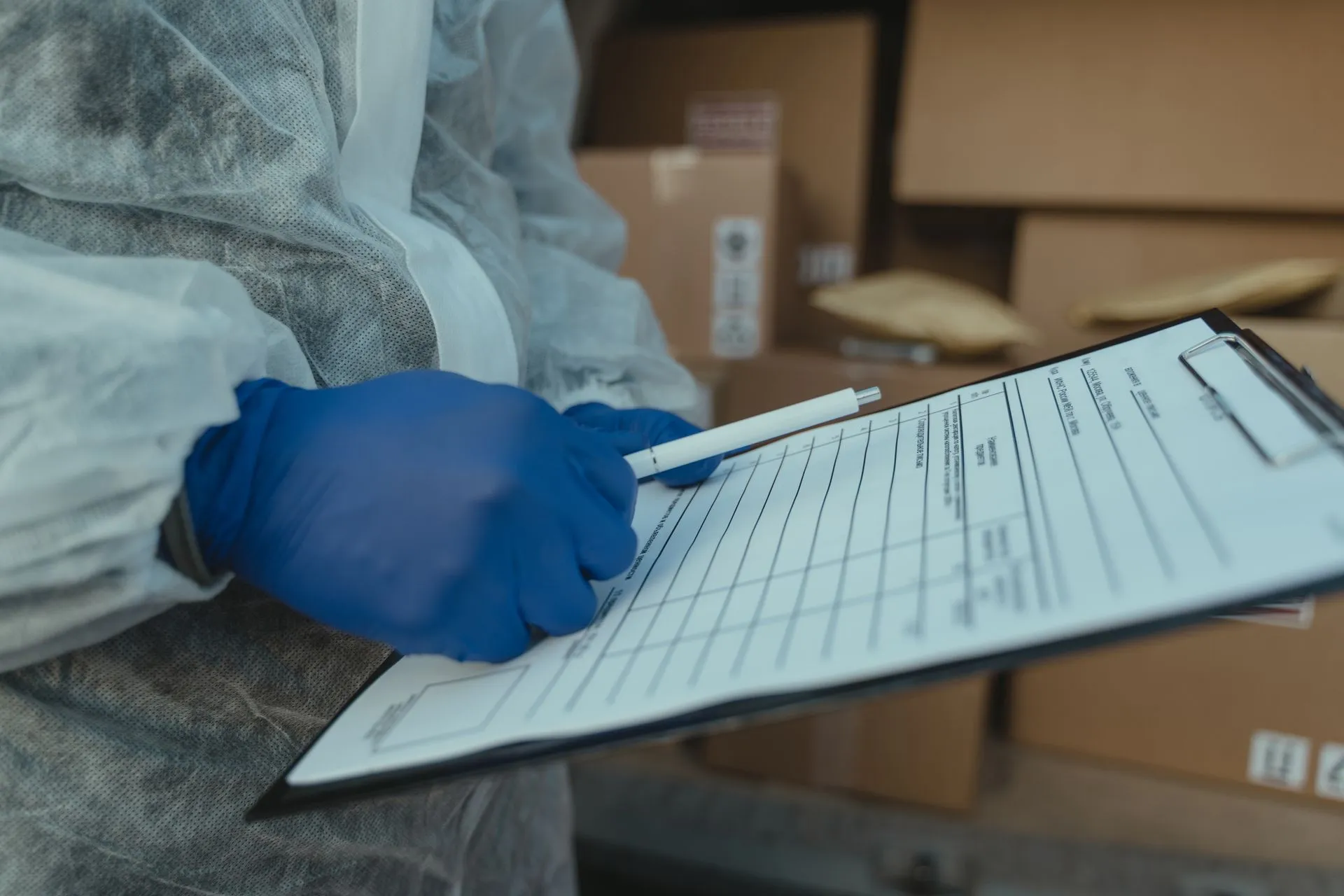
On almost every site visit we find the same pattern. The form has the day’s three measurements, with plausible numbers and uniform handwriting — because it was filled in all at once, at the end of the shift, from memory.
Nobody does this in bad faith. They do it because the operation is busy and the mid-afternoon round didn’t happen.
The problem is that this record doesn’t survive serious questioning. Numbers that are too round, no natural variation between readings, exact timestamps every two hours — these are patterns any experienced auditor recognises. And when the credibility of one record falls, the whole history falls with it.
What automatic logging changes
Continuous logging solves the problem at source: data is recorded by the equipment, timestamped by a real-time clock, with no human intervention.
Three characteristics matter in an audit:
- Continuity. Readings at a fixed interval, with no gaps. If connectivity dropped, the receiver’s local buffer fills the series in afterwards — no hole in the history.
- Immutability. Records cannot be edited retroactively. Corrections and justifications enter as new events, preserving the original.
- Traceability. Every alarm carries who received it, who acknowledged it, when, and what action was recorded.
The report stops being a document produced for the inspection and becomes a slice of what the operation already uses every day.
What to do when temperature leaves the range
Thermal excursions will happen. Maintenance, load replenishment, defrost, power cuts. What inspectors assess isn’t the absence of deviation — it’s the existence of a process.
A minimum procedure has five steps:
- Detect the deviation when it happens, not on the next round.
- Record duration, peak temperature and products involved.
- Assess the impact against a technical criterion defined in advance — not improvised on the spot.
- Decide the product’s fate, with the authorising person identified.
- Correct the cause and record the action, with later verification.
Connected monitoring systems cover steps 1, 2 and 5 well. Steps 3 and 4 remain human decisions and technical responsibility — and it’s good that they do.
How long to keep it
Retention periods vary by segment and applicable rule. As a practical field rule, food operations tend to work with a minimum of 12 months of accessible history; pharma usually demands more, with additional requirements for traceable instrument calibration.
Confirm the specific period with your technical officer. And make sure “keeping” actually means being able to retrieve: a CSV in a shared folder nobody knows how to open is not accessible history.
The simple test
If you want to know in five minutes how your documentation is doing, ask your team this: what was cold room 3 reading at 4am on the 14th of last month, and what happened afterwards?
If the answer takes more than two minutes or depends on someone hunting through a folder, the record exists but isn’t usable. And an unusable record, in an inspection, is close to no record at all.
We put together a checklist of what usually gets asked for in an inspection. It’s available on the resources page, with no long form.
- #compliance
- #audit
- #food safety